
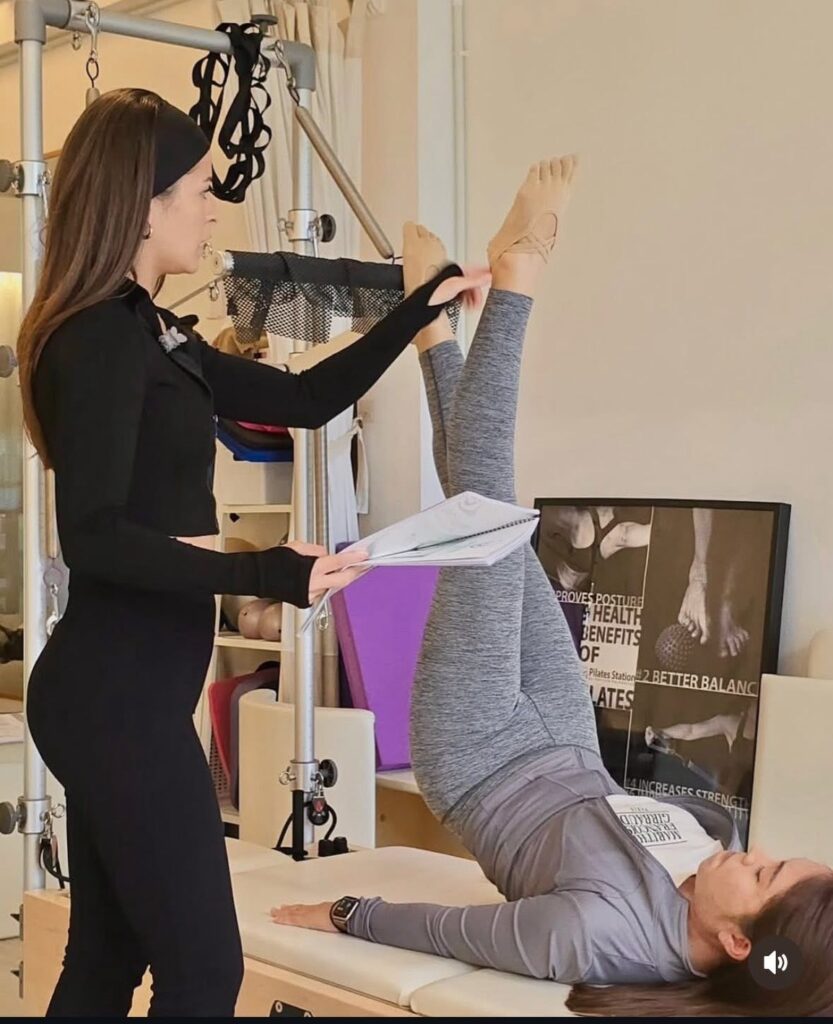
Why Pilates and Strength Training Belong Together
Pilates helps you move with precision. Strength training builds the muscle and bone capacity to keep doing it. For women entering midlife, the most intelligent exercise plan may not be choosing between the two—but understanding why the body increasingly needs both.
In our forties, the purpose of exercise often begins to change. Looking fit may still matter, but feeling capable matters more: carrying luggage without hesitation, getting up from the floor easily, maintaining healthy bones and trusting the body to support an active life for decades.
Pilates and strength training contribute to that future in different ways. One develops control, coordination and awareness. The other provides the progressive challenge muscles and bones need to remain strong.
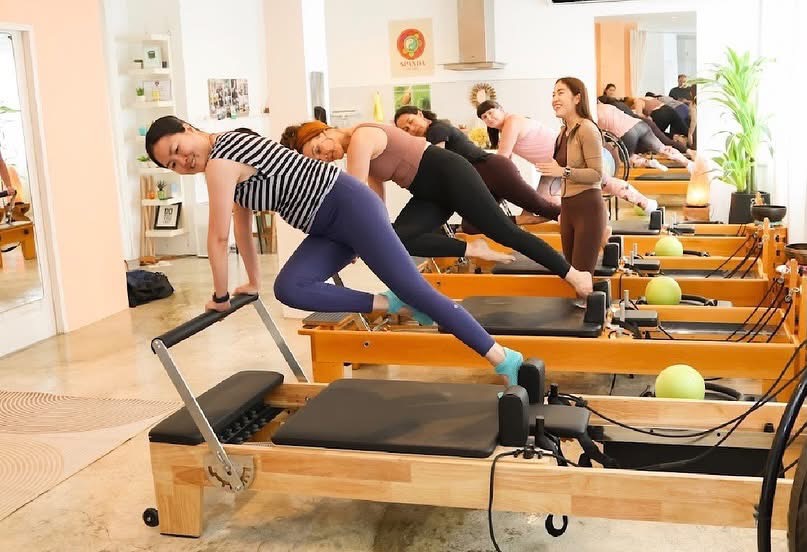
The latest science suggests that neither needs to replace the other. The real advantage may come from combining them.
There is a familiar debate in the wellness world: Is Pilates enough, or should we be lifting weights?
It is an understandable question, but perhaps not the most useful one. Pilates and resistance training are not competing for the same job. They overlap, but each offers something the other may not provide as efficiently.
Pilates can help us organise movement. Strength training increases the amount of force our muscles can produce. When they are practised together, the result can be a body that is not only stronger, but better able to use that strength.
WHAT PILATES DOES PARTICULARLY WELL
A good Pilates session asks you to pay attention to details that can disappear during a conventional workout.
Can you move your leg without allowing the pelvis to follow? Can you breathe while maintaining trunk control? Can you press through your feet without gripping your shoulders? Can the right and left sides of your body share the work?
This is partly a matter of proprioception—your ability to sense where your body is and how it is moving.
The springs and moving carriage of the Reformer provide immediate feedback. If you push unevenly, rush through a transition or lose control of the return movement, the equipment often makes it noticeable.
That feedback can improve coordination, body awareness, balance and confidence. It can also help someone become more comfortable with movement before introducing heavier resistance.
However, greater control is not automatically the same as greater strength.
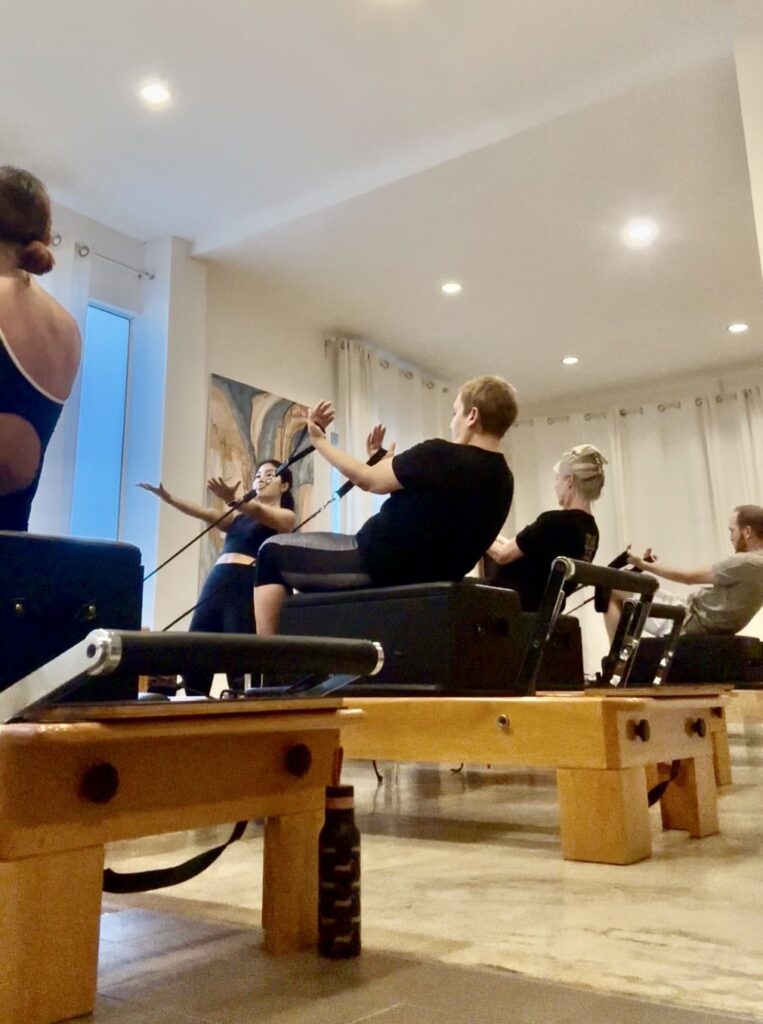
WHERE STRENGTH TRAINING BECOMES ESSENTIAL
Muscles and bones adapt when they are given a meaningful reason to adapt.
In strength training, this usually means progressive overload: gradually increasing the resistance, repetitions, range or complexity as the body becomes more capable.
This does not require bodybuilding or extreme workouts. It might involve dumbbells, resistance bands, weight machines or carefully selected bodyweight exercises. The important point is that the challenge must eventually progress.
A 2024 systematic review examined 24 randomised trials involving 1,190 adults over 60. It found that the evidence was not strong enough to recommend Pilates alone as a reliable way to improve muscular strength and power in this age group. Some studies found improvements in muscular endurance, but the quality of evidence was limited. (pubmed.ncbi.nlm.nih.gov)
That is not a criticism of Pilates. It is an example of specificity: the body becomes better at what it repeatedly practises.
Pilates can be demanding, particularly when the springs, tempo, range and exercise selection are appropriately progressed. But if the primary goal is to increase maximum strength, muscle mass or bone-loading stimulus, dedicated resistance training usually provides a clearer pathway.
THE 2026 SCIENCE UPDATE
The American College of Sports Medicine released its first major resistance-training guideline update in 17 years in 2026. After reviewing evidence from more than 30,000 participants, the central message was surprisingly simple: consistency matters more than creating a complicated programme.
For most adults, the biggest step is moving from no resistance training to regular resistance training. ACSM recommends training the major muscle groups at least twice per week and progressing gradually over time. (acsm.org, acsm.org, acsm.org)
This is encouraging news. We do not need a perfect programme before we begin. We need a sensible programme that we can continue.
WHY THE COMBINATION WORKS SO WELL
Imagine strength as the size of your engine and Pilates as part of the steering system.
Strength training develops the capacity to lift a suitcase, climb stairs, get up from the floor and maintain muscle as the years pass. Pilates helps you notice how you organise your ribs, pelvis, spine and breath while producing that force.
One builds capacity. The other refines control.
For women approaching or moving through midlife, both deserve attention. Changes in hormones, sleep and recovery can affect the way exercise feels. At the same time, preserving muscle, power and bone strength becomes increasingly important.
A balanced week might include two resistance-training sessions, one or two Pilates sessions and regular walking or other cardiovascular activity. That is an example, not a prescription; the right balance will depend on health, experience and personal goals.
MYTH: PILATES GIVES YOU “LONG, LEAN MUSCLES”
Muscles do not become physically longer through a particular type of exercise. Their visible appearance is influenced by genetics, muscle development and body composition.
Pilates can improve control, muscular endurance and the way someone carries themselves. Those changes may alter how the body looks and feels, but the muscles are not being lengthened into a different shape.
MYTH: LIFTING WEIGHTS WILL MAKE WOMEN BULKY
Developing a large amount of muscle requires specific training, sufficient nutrition, time and individual genetic capacity. Ordinary resistance training does not suddenly transform the body.
For most women, the more relevant outcomes are improved strength, physical confidence and the ability to manage everyday tasks with greater ease.
FACT: THE BEST PROGRAMME DOES MORE THAN ONE THING
No single exercise method needs to solve every health need.
Pilates does not become less valuable because it is combined with strength training. It becomes part of a more complete approach—one that develops awareness and control while also giving muscles and bones the progressive challenge they need.
The goal is not to choose a side. It is to build a body that can move well, carry load and remain capable for the life ahead.
SOURCES
Oliveira LS et al. “Effects of Pilates Exercises on Strength, Endurance and Muscle Power in Older Adults: Systematic Review and Meta-Analysis.” Journal of Bodywork and Movement Therapies, 2024.
American College of Sports Medicine. “Resistance Training Prescription for Muscle Function, Hypertrophy and Physical Performance in Healthy Adults.” Updated Position Stand, 2026.
Watson SL et al. “The LIFTMOR Randomized Controlled Trial.” Journal of Bone and Mineral Research, 2018.