
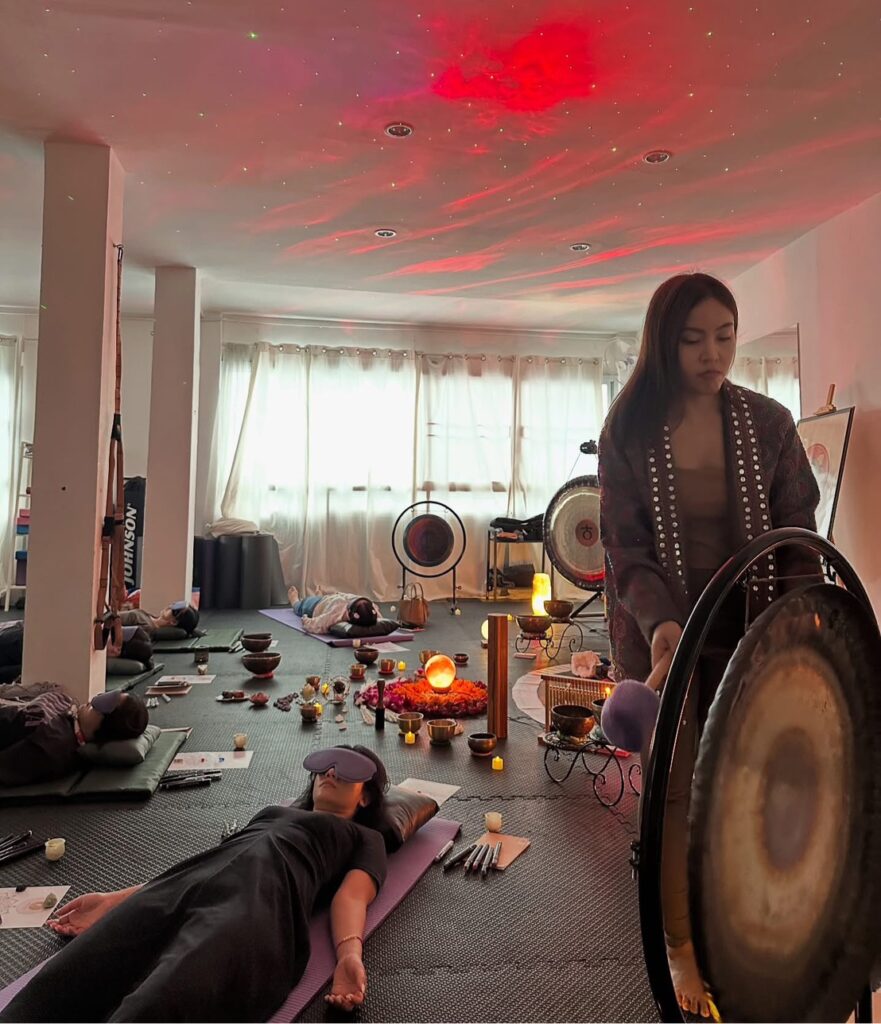
Many people come to a sound bath simply feeling tired, overstimulated, or disconnected from their body. They may not be looking for “healing” — just a pause.
Yet after the session, a common response is:
“I feel calmer than I have in weeks.”
This response isn’t just emotional. It’s physiological.
⸻
How Sound Affects the Nervous System
Sound travels through the body as vibration. When tones are slow, repetitive, and resonant — like those used in singing bowls or gongs — the nervous system often shifts out of stress mode and into a state of rest.
Medical researchers describe this as activation of the parasympathetic nervous system, the part responsible for recovery, digestion, and repair. When this system is engaged, breathing slows, muscles soften, and the mind becomes quieter.
According to UCLA Health, sound-based practices may support relaxation, reduce stress, and calm the nervous system — which helps explain why sound baths often feel deeply restorative, even after one session .
⸻
What Research Shows About Sound Baths
A U.S. study published in the Journal of Evidence-Based Integrative Medicine found that participants experienced:
• Reduced tension and anxiety
• Decreased negative mood
• Increased relaxation and sense of well-being
after a single sound meditation session — even among people with no meditation experience .
The National Institutes of Health (NIH) also highlights that practices activating the relaxation response can lower stress hormones and support overall nervous system health — an important foundation for long-term wellness .
⸻
Is It About a Specific Frequency?
Online searches often focus on specific numbers like 432 Hz or 528 Hz. Current science does not confirm that one exact frequency heals a specific organ.
What research suggests instead is that the overall experience matters most:
• rhythmic sound
• sustained tones
• stillness of the body
• a safe, quiet environment
Together, these elements help the brain and nervous system settle into a calmer state.
⸻
Sound Healing at SPANDA
At SPANDA, sound healing isn’t about belief or effort. It’s about creating space for the body to slow down — something many people rarely allow themselves to do.
Sound baths complement movement practices like Pilates by helping the nervous system integrate, release tension, and rest more deeply.
Sometimes, the most powerful form of wellness isn’t doing more —
it’s letting the body listen.
⸻
Science References
• UCLA Health — What Is Sound Therapy and Could It Benefit Your Health?
• Goldsby et al., Journal of Evidence-Based Integrative Medicine — Effects of Singing Bowl Sound Meditation
• National Institutes of Health (NIH) — The Relaxation Response and Stress Reduction